

Back Pain / Sciatica / Lower Extremity Radiculopathy · scheduled consultation
Lumbar Spinal Stenosis
Review for leg pain, heaviness, numbness, or weakness that worsens with standing or walking and may relate to narrowing around the lumbar nerves.
When consultation may help
Bring the concern into focus.
Symptoms, imaging, prior care, function, and goals are organized into one clear clinical question.
Relief when sitting, bending, or leaning forward
↗Reduced walking distance or frequent rest stops
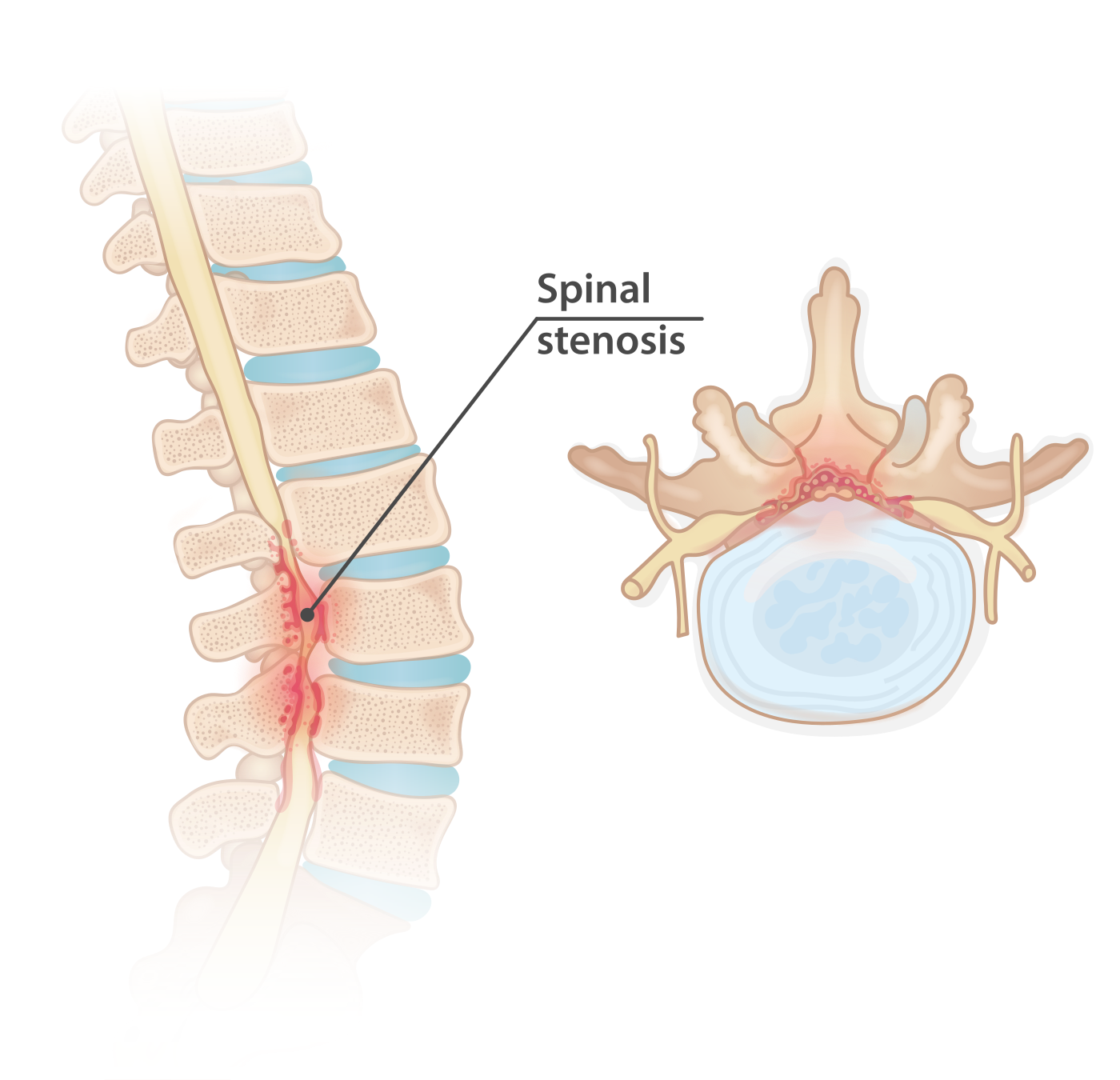
↗MRI findings described as canal or foraminal stenosis
↗
Prepare for the review
Bring the evidence—not only the label.
Lumbar MRI images and report
Notes from therapy, pain management, or prior spine care
A list of treatments tried and the response
A realistic description of daily walking and activity limits
How this concern is approached.
Imaging severity is considered alongside function, neurologic findings, health history, and goals. The plan should explain what is urgent, what can be observed, and which options are reasonable now.
Understand the decision
The details that shape the plan.
What does stenosis mean?
Stenosis means narrowing of spaces around the spinal nerves. In the lower back it can contribute to leg discomfort, numbness or weakness with standing or walking. The scan is interpreted alongside those symptoms and the examination.
Why does walking tolerance matter?
Explain how far you can walk, what makes you stop and whether sitting changes the symptoms. Those details help describe the effect on daily life and provide a practical way to assess progress.
What options may be discussed?
Depending on the findings, the conversation may include nonsurgical care or surgery to relieve nerve compression. Ask what each option is intended to accomplish and what would justify changing course. A scan label alone does not determine the plan.
A disciplined visit
Listen. Review. Explain. Plan.
Listen
Clarify symptoms, timing, prior care, health history, daily impact, and goals.
Review
Place actual imaging, reports, comparison studies, and records in clinical context.
Explain
Translate the finding, real uncertainty, and reasonable options into plain language.
Plan
Define who owns testing, follow-up, referral, conservative care, or surgery when appropriate.
Leadership behind the care
Clinical focus. Operational discipline.

Dr. Stacey E. Podkovik
Dr. Podkovik leads neurosurgical evaluation across brain and spine concerns, connecting symptoms, imaging, prior care, and patient goals into a careful clinical interpretation and practical next step.
Dr. Laura Purdy, MD, MBA
Dr. Laura Purdy, MD, MBA, supports the practice through physician-led management, care coordination, and reliable systems. Dr. Stacey Podkovik leads neurosurgical evaluation and treatment.
When symptoms should not wait.
Sudden bladder or bowel dysfunction, saddle numbness, rapidly worsening weakness, or inability to walk safely requires emergency evaluation.
Sources behind this overview
Patient education from established clinical organizations.
These links support the general educational overview. They do not replace a clinician’s interpretation of an individual history, examination, or imaging.
Continue exploring
Every pathway stays connected.
01Back Pain, Sciatica & Leg WeaknessExplore02Lumbar Spinal StenosisYou are here03Herniated Lumbar DiscExplore04Spondylolisthesis & Spinal InstabilityExplore05Neck Pain & Arm RadiculopathyExplore06Cervical Myelopathy & Balance ChangesExplore07Brain Tumors & Intracranial CystsExplore08Hydrocephalus & Shunt CareExplore09Normal Pressure Hydrocephalus & IIHExplore10Neurotrauma Follow-Up & Brace ClearanceExplore11Imaging Review & Incidental FindingsExplore12Neurosurgical Second OpinionsExplore
General educational information only. This page does not replace a medical evaluation. Calling the office, using the navigator, or reading this page does not establish a physician-patient relationship. The Care Navigator is scripted and does not diagnose or triage.